
ACO Environment
Oil-Water Separation & Spill Control
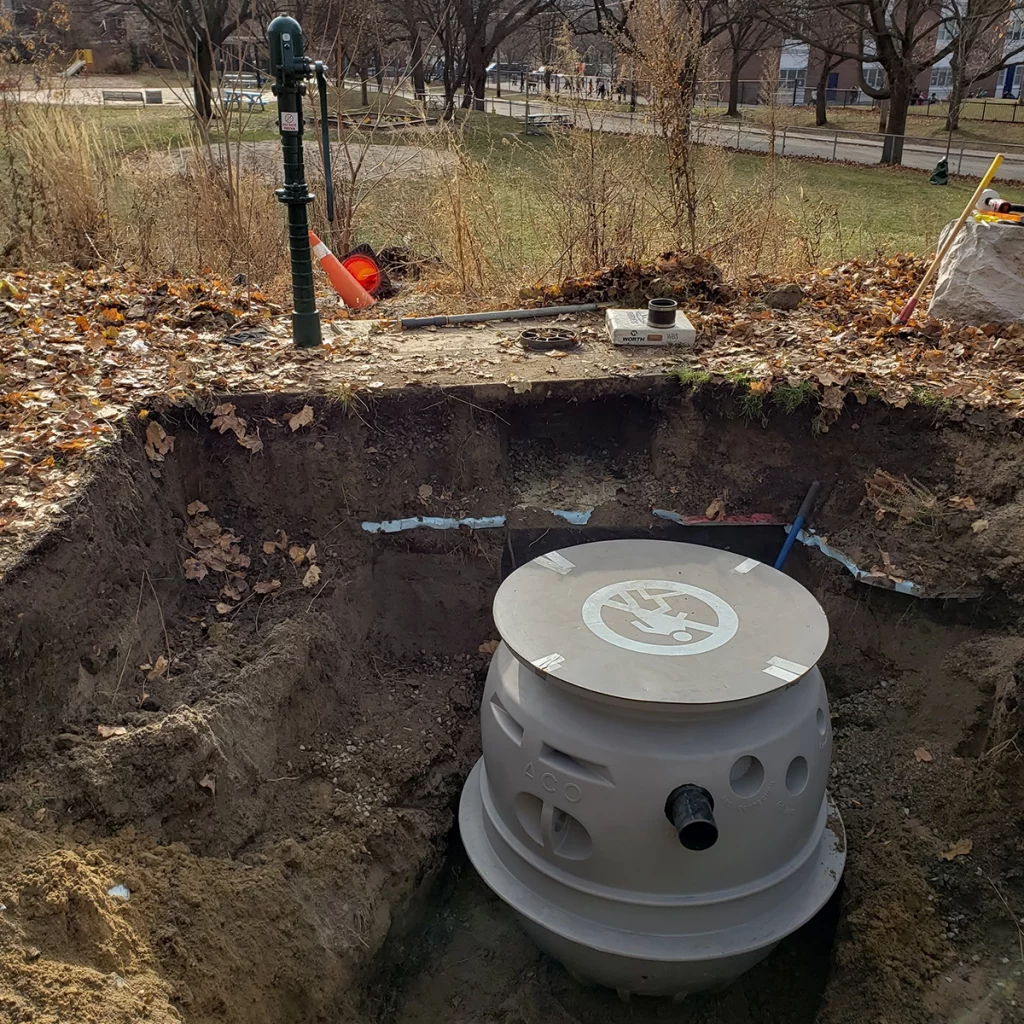
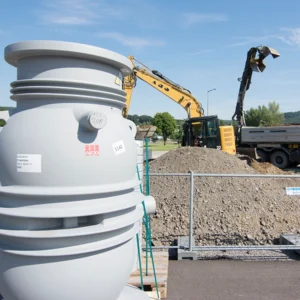
ACO oil water separators are designed and built to protect our water by removing even the finest particles of mineral oils, fuels and hydrocarbons from wastewater and storm water in the most efficient way. Oil water separators are typically used in facilities such as vehicle service storage, parking areas, fuel stations and any location where oil spills are possible.
Product Lines
-

Oil-Water Separators
Stormwater TreatmentPolymer concrete and polyethylene separators capable of removing oil and suspended solids from wastewater. Multiple capacities and flow rates available.
-
Spill Containment Curbs
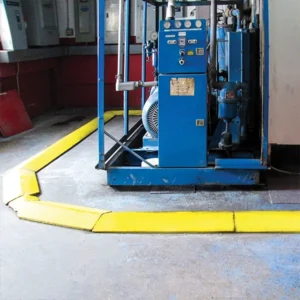
Spill RetentionDurable, low-maintenance polymer concrete barrier for containing hazardous spills in industrial and chemical storage areas. Sloped for forklift traffic.
FAQ
Oil water separators are gravity based pieces of equipment that separate light liquids, such as mineral oils, fuels and hydrocarbons, and suspended solids from polluted water before it is discharged into the sewer system. Light liquids (oil) have a specific density less than 1 (water). Solids (sludge) have a specific density greater than 1.
Gas station, parking area, truck yard
Car dealership, auto repair shop, car wash
Bus garage, military hangar and storage facility
Fire station
Engine cleaning, workshops, vehicle recovery
Transfer stations, tank pits, transformer stations
Airport apron, railway station, container terminal
Industrial facilities with risk of accidental oil spills
Municipal sewer bylaws and provincial and federal environmental laws describe situations where oil water separators are required. Legislation helps to minimize water pollution and maintain clean water for society and future generations.
All oil water separators in the construction industry are based on gravity. Oils have a specific gravity (0.8 – 0.94) less than water (1) – they float to the surface of the water. Solids, with a specific gravity higher than water, sink to the bottom.
Initially, oil water separators were simple large boxes, usually concrete, in which the separation process took place. The time polluted water spends in the separator from the inlet to outlet is called the "retention time". The larger the box, the more retention time, resulting in better separation.
No. The term ‘oil’ refers to hydrocarbon derivatives. Grease, F.O.G., from the food industry and fats from animal and vegetable sources behave differently than ‘oil’, therefore, kitchen based grease requires an ACO grease separator. Visit acousa.com for more information.
Yes. As a general rule gravity based oil water separators should not be used with oils that have been emulsified as the separators are unable to separate such oils.
Oil water separator capacity is determined by “time of retention”. This is the time an oil particle spends in the separator prior to exiting. The time needed for an oil particle to rise to the surface must be shorter than the time of retention. Separators with a longer time of retention are more efficient. Time of retention can be extended by increasing separator tank size. It is common for simple separators to be sized by tank volume.
ACO Oleopator P separators eliminate the need for larger tanks with the use of a coalescence unit. The coalescence unit allows for highly efficient separation in a small, inexpensive tank by not allowing fine oil particles through the coalescence unit – thus extending retention time indefinitely. This allows the calculation of sludge capacity in coordination with the flow rates. The user does not have to pay for unnecessary storage capacity resulting from time of retention.
ACO Oleopator P separators have modern design driven by the European standard EN858 that complies with UL 2215. They provide market leading oil separation efficiency in a compact tank. Oleopator P separators have a mechanical valve that shuts off automatically when maximum oil capacity is reached. This protects the sewer system, equipment and environment.
The units are competitively priced, inexpensive to install, and maintain, and come with a 50 year structural warranty that protects against leaks.
The process by which two or more droplets, bubbles or particles, merge during contact to form a single droplet, bubble or particle.
In oil water separators, the coalescence units force fine oil particles to combine into large ones, which float to the surface
Polluted water includes solid particles – these can clog coalescence units. Proper scheduled maintenance prevents this.
Easy to clean coalescence units provide a significant end user advantage.